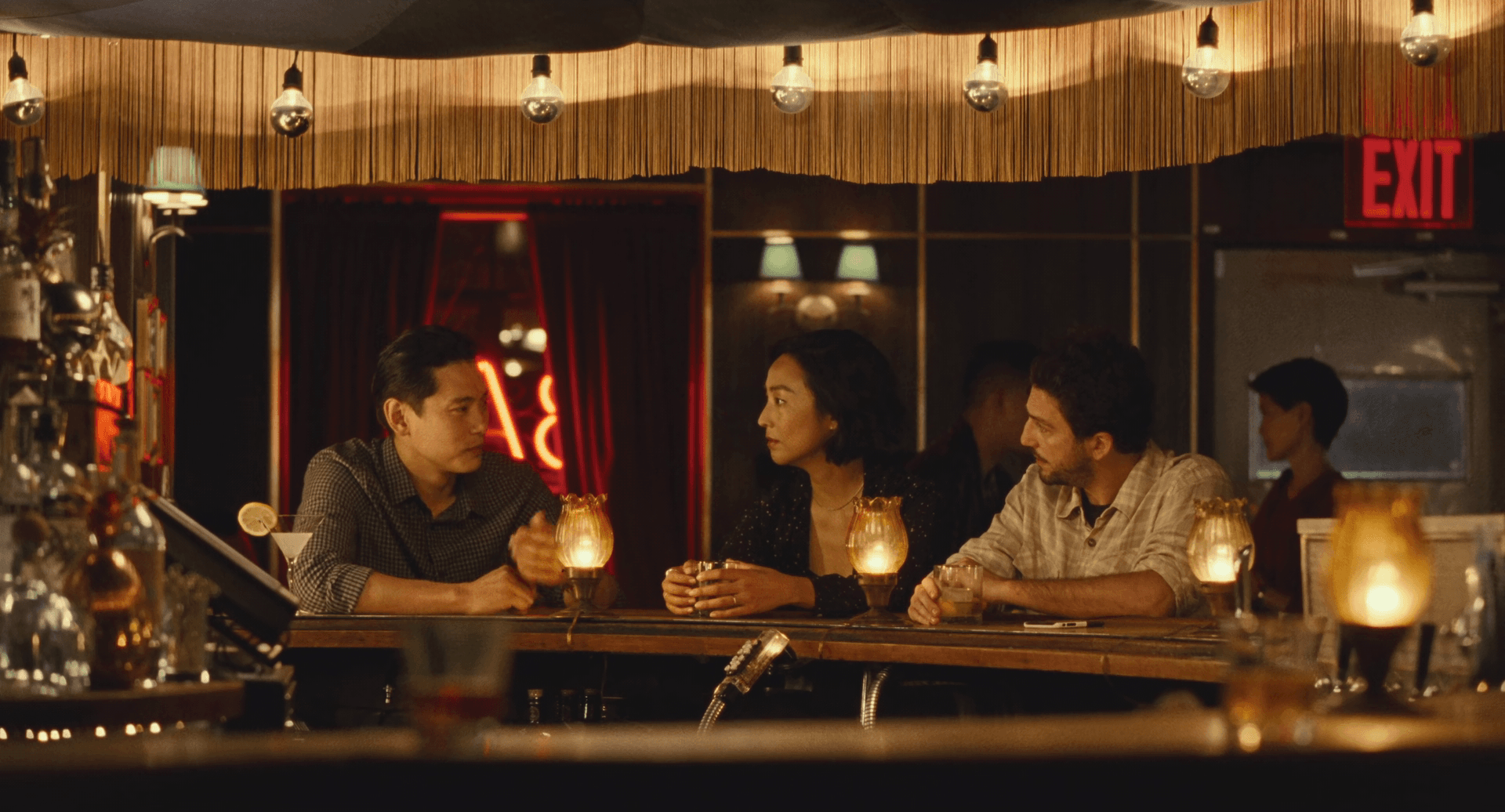
I have just watched the trailer for Celine Song's upcoming movie, Materialists. I am very excited about this because (a) Celine Song is the director of Past Lives, and (b) Past Lives is amazing.
Why is it so great? Because it's a movie that touches on the very essence of what it is to be human: it says a lot about how we make choices in life, the price of those choices and how we live with them.
The movie starts out in South Korea, where we meet Na Young and Hae Sung. By following these two characters around—on their way to and from school, on a park playdate—we get a sense of their friendship. As viewers, we expect to see their relationship develop as they grow up together.

But Song has other plans for this story. Out of the blue, Na Young's family emigrates to Canada, leaving behind Hae Sung without so much as a proper goodbye. Years pass. Hae Sung becomes a man and finishes his military service in Korea. Meanwhile, Na Young—now Nora Moon—has moved to New York City and is an accomplished playwright. 12 years have come and gone since she saw her childhood friend, and one day while reminiscing with her mom she stumbles upon him on Facebook. She sends Hae Sung a message; they call each other. We see them slowly reconnect as they catch up on lost time. They grow close together again, but their lives make it impossible for them to meet up for real: Hae Sung is going to China for a Mandarin language exchange, and Nora is attending a writer's retreat in Montauk.
At this retreat Nora meets Arthur Zaturansky, an American writer, and they... fall in love?! From the very beginning, we were set up to cheer for Na Young and Hae Sung: they are meant for each other! This is what every romance movie ever has told us, isn't it? These two characters must go through hardships, face challenges and eventually find each other—be together! But life isn't so simple, as Song quietly reminds us. And so it goes: Nora and Arthur eventually get married, and build their life together in New York.
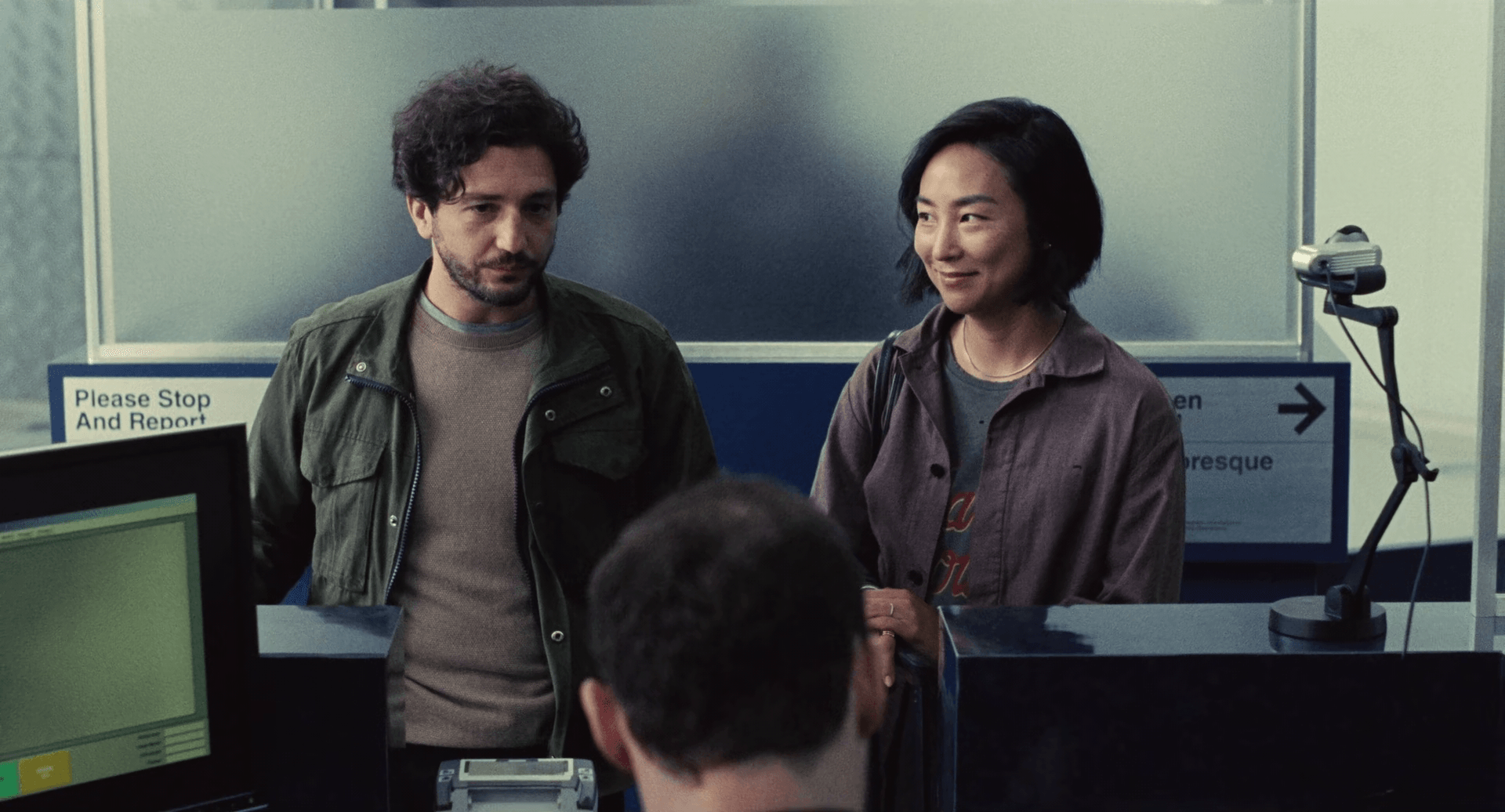
And then, more than a decade later, Nora hears from Hae Sung again. He is visiting the U.S., and would like to see her. To really meet her this time.
This meeting is the very crux of the whole movie. In a way, it's like Nora and Hae Sung never left each other: they catch up on each other's lives as if there weren't two decades of separation between them, as if it were just yesterday that they were playing in the kids' park in Seoul. Even though they went their separate ways all those years ago, Nora finds it easy to talk to him: they have a cultural connection that makes it easy to relate to each other, and they share common values. Values that Arthur might not be able to fully understand.

Past Lives is a movie about the choices we make, and the cost of those choices. Song shows us in such a delicate, beautiful way, how the opening of one door is also the closing of many others. By moving to America Nora left behind a future with Hae Sung, all the possible lives she could have lived in South Korea. But she also gained a new life that wouldn't have been possible back in her home country.
I think this movie resonates a lot with me because I've always found those choices painful. I also wonder too much about the what-ifs, all the other paths that could have been if only I'd chosen differently. It is not so much a feeling of regret, but rather one of loss over those possibilities. The heavy realization that even tiny choices constantly move you along in life, closing off so many alternative roads, and it's a one-way street. I struggle a lot with that because, in a way, I guess I'm greedy: I want to take many paths, not just one. I want to start a career, change to another career. Live here, there and over there too. Date different people, try different ways of living! After all, why wouldn't I? But as the years go by, a certain understanding starts to creep in: all choices have a cost, and there's no way around that. Every decision I make, is another path I surrender.
This contradiction of choice, both sad and beautiful, is so deeply at the core of being human and I think that's what makes Past Lives so memorable. As Na Young's mom says: "It's true that if you leave you lose things, but you also gain things, too."
I left people and places in my life, sometimes only realizing years later it might've been the last time I see them. Would I have cherished those moments more if I knew they were the last time? Or would the awareness have ruined them altogether?

The movie is that much better, too, due to the fact that Song actively refuses to portray Arthur as a villain. The temptation is strong for us to see him that way, to wish he would go away and let Nora and Hae Sung be together. As Truest Pictures says in his great video essay:
We've become conditioned by convention to expect to dislike, or even hate, the third insertion of a love triangle. But Past Lives handles this character with such care that we can't help but understand Arthur and even sympathize with him.
Arthur understands quite clearly that Nora & Hae Sung have feelings for each other, and that he might be the third wheel in this scenario. But despite this, he chooses to be open with Nora about these insecurities and trust their relationship. This trust, however, doesn't take away the obvious pain Arthur feels when he realizes he can never take part in some of the things Nora & Hae Sung share. The world they lived in as kids, that specific time and place in Seoul, is something Arthur will never know for himself: "You dream in a language I can't understand. It's like there's this whole place inside you I can't go."
We learn to live with our choices, as does Nora when she understands her life is in New York with Arthur. Or rather, more precisely, when she chooses that it is so. But we cannot help ourselves from sharing the pain of her decision. The mourning of an alternate life she could've led with Hae Sung.
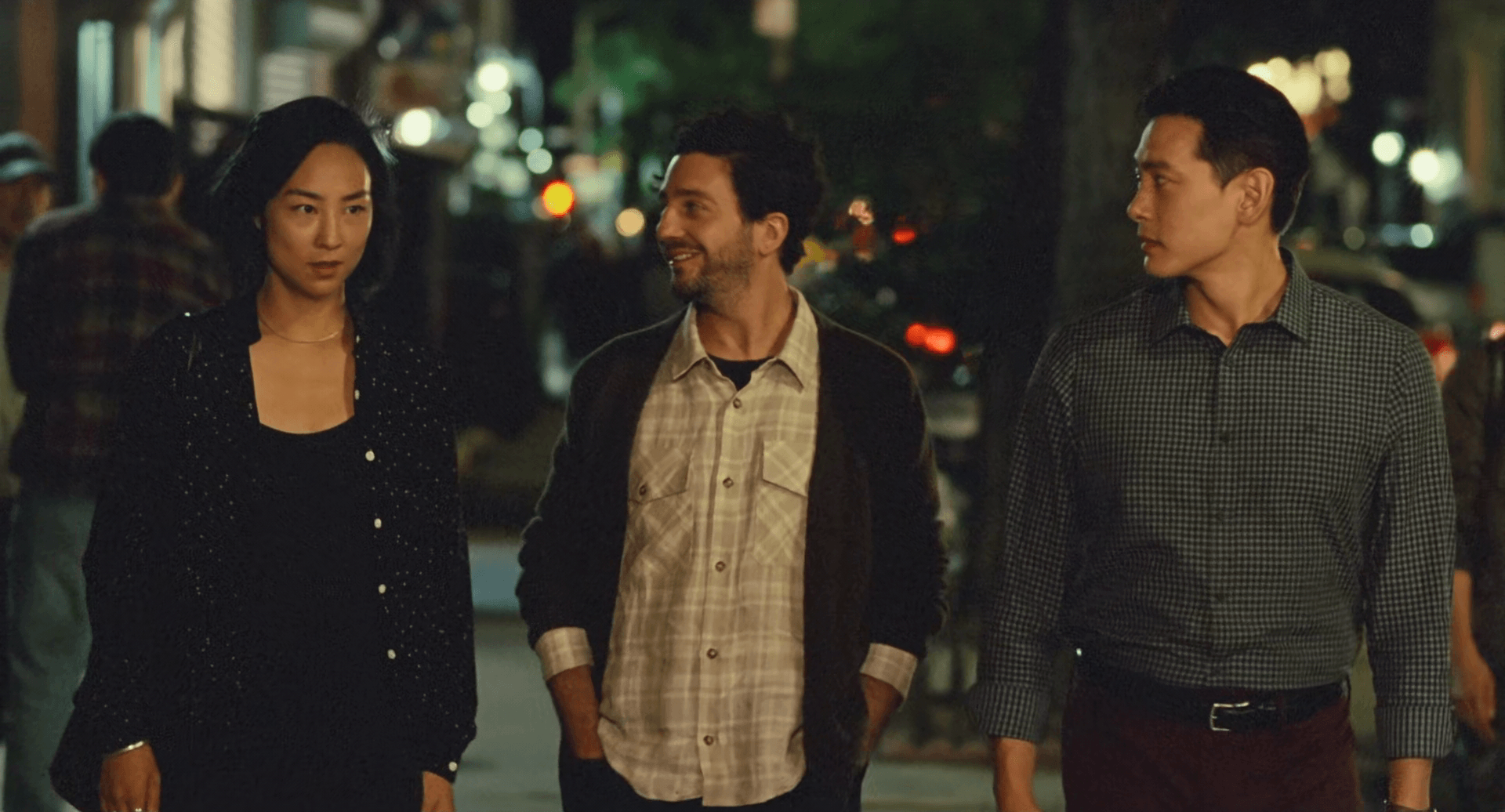
Nora: The Na Young you remember... doesn't exist here.
Hae Sung: I know.
Nora: But... that little girl did exist. She's not sitting here in front of you... but it doesn't mean she's not real. Twenty years ago, I left her behind with you.
Hae Sung: I know. And even though I was only twelve, I loved her.
Ralph Waldo Emerson once said: Of all the ways to lose a person, death is the kindest
. It must truly be a painful realization for Hae Sung, that the woman in front of him is not the girl he lost back in Seoul all those years before. But he parts ways with Nora on a message of hope: that maybe in a next life they'll meet again.